SCOTHERN, WHATS IN A NAME
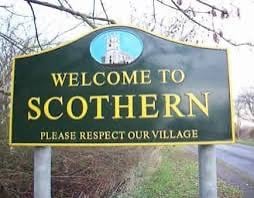

Scothern’s name is a bit of a mystery. Up until the 1940’s it was called Scothorne. However long before that in the 1086 Doomsday Survey it was called Scotstorna. Sudbrooke, which was part of the Scothern Hundred however is clearly Anglo-Saxon village name, Sud-Beck, means South Beck because it is positioned south of Scothern which was the main settlement in the Anglo district of the Scothern 100. This area is land enough to feed 100 families.
It has been suggested that Scothorne's name originated from Scottish raiders that came deep down south and settled here after the Romans left in 410 AD. The Thorne being a prickly village hedge that protected the Scotsmen. I don’t believe this is true because at the time the Scots were actually living in Ireland. The Romans had named the Irish, Scoti, meaning raider or pirates. This similar to how we know call later Scandinavian raiders all Vikings. ‘Vikingr’ is the Norse word for raider or pirate similar to Scotti being the Roman word for Irish Raiders. It was the Picts, who then lived in what we now call Scotland, and raided along the east coast as the Romans left Britain. The Picts, as well as not being called Scoti, would have found it hard to live in a very small community in Lincolnshire surrounded by hostile Britons!
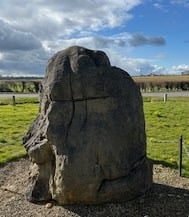
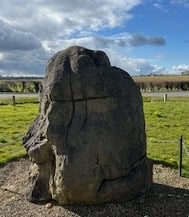
It has also been suggested by 1950’s historian, Florence Baker, that there was a large standing stone here where taxes were paid at the ‘Scotstone.’ This is possible, with such a stone probably standing on the hill above the Scothern’s Manor site acting as a Wepontake. Anglo’s would gather there to vote on local decisions, pay taxes and maybe even to worship the pagan gods. It is also thought Scothern’s first church was on the manor hill and later Christians tended to build their churches on pagan sites.
Scothern’s Stone or not it is likely the old name for Scothern is a marriage of Anglo-Saxon and Viking languages. Scot is Norse meaning coins or tax and Torne is a place to pay tax. Was Scothern called Scottorne? Also Skeat is an Anglo-Saxon word meaning coin or tax. What we have to remember hardly anyone could write and names were passed down through word and mouth down the centuries. Even now in the Bottle and Glass Pub these days some people do ‘Not pay their shot’ or ‘Get away Scot free!’ when not buying a round
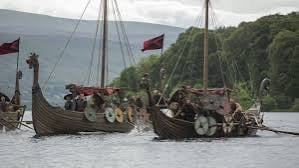
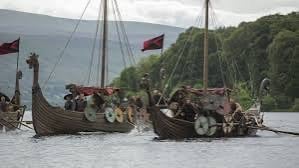
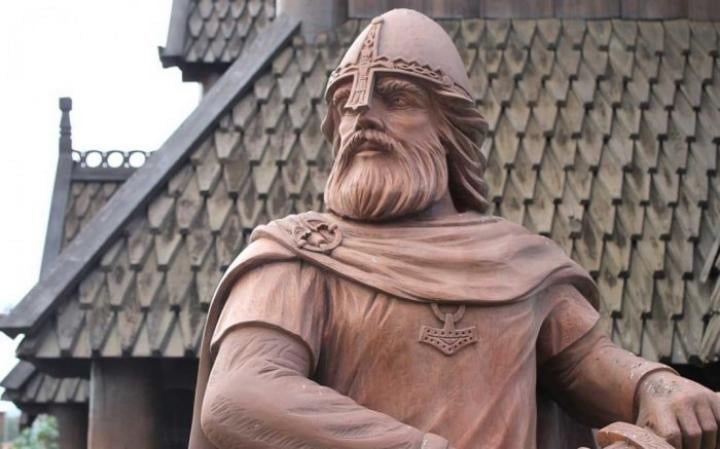
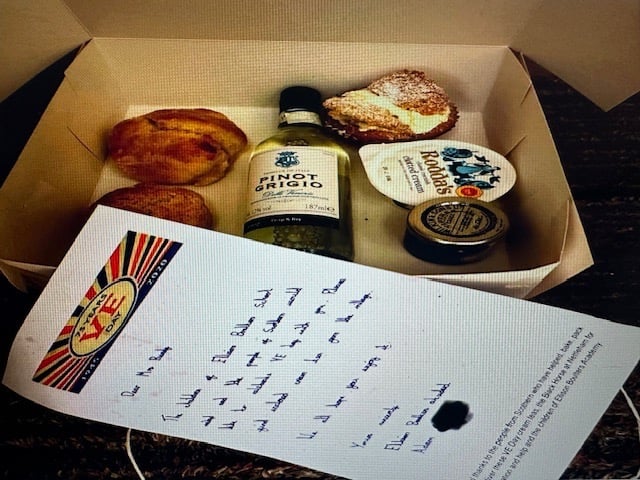
Iva the Boneless Bringing Iva's body to Repton Scothern VE Day Scones
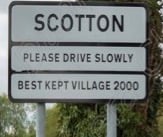
However there is one more intriguing version, written in Kevin Leahy’s excellent book, ‘The Anglo-Saxon Kingdom of Lindsey.’ In it he points out that Irish coins were found at the Viking Great Heathen Army’s winter camp at Torksey about 10 miles from here. He surmises that Irish / Dublin mercenaries were part of the Great Viking Heathen Army who then settled in Scotter, Scotton and Scothern after the Great Army broke up and gave up their swords for ploughshares (Farming). This seems very plausible because a Norse family from Scotton owned much of Scothern at the time of the Norman conquest. Irish coins were also found at Repton, a larger Viking encampment further down the Trent from Torksey. Kevin Leahy explains, “To be a Viking was more of a trade description than a racial trait.” A Viking leader would not refuse a six foot red haired Irishman (Scotti) a seat in his longship as a warrior. At Repton there are many Viking burials and one in particular is of a 7 foot tall high class warrior. It is possible that this is the famous Viking ‘Iva the Boneless.’ Was he called boneless because in a time when most men were about 5'4'' he was a ridiculous seven foot? It is known after fighting here with the Great Army he left to fight in Ireland where he died and was then brought back to Anglo-land. This gives us another possibility. Was it the Dublin Irish Vikings whom rowed Iva the Boneless’s body down the Trent to be buried at Repton. Did they then stop at Torksey and decided to settle at Scotton, Scotter and Scothern after taking the villages off their previous Anglo Saxon Lord of the manors ? Are Viking Scoti (Irish) our Scothern ancestors?
There is also another synopsis about Scothern’s name. After delivering cream teas around the village for VE Day celebrations in 2020, I came across a piece about an ancient scone festival it states happened in Scothern up until the 1650’s. It claimed that the village name came from this tradition, ‘Scothern can trace its name at least as far back as the fifteenth century, when it was listed in church records as Sconethorne, an early reference to the scones, made from local wheat flour and saffron. Up to the mid seventeenth century an annual festival took place on the village green to celebrate the scone, and Scothern's then links with the saffron growing areas of Essex, (notably Saffron Walden). Since that time, which coincides with the time at which the Marfleet family (from whom the original Saffron recipe derived) left the area, following the great famine of 1624, the festival has ceased to be observed. A crocus symbol can still be seen high up in the tower of the church’.
A nice story but I cannot find any historical records to prove this or a Crocus symbol on Scothern's church tower.
NOTE FROM THE AUTHOR: This is a personal website written and produced by Scothern resident Rod Wilson for the interest of the community. Although I hope it is also of interest to others interested in Lincolnshire history and also nationwide as Scothern and Sudbrooke are typical ancient villages in common with many others in England.
The author has lived in the Scothern Hundred, the medieval district of Scothern, Sudbrooke and Holme, since 1964 when my family moved to the then new Oak Close Sudbrooke. I have lived in Scothern on and off since 1979. Nevertheless I have been told I am still a 'Newcomer' which is fair enough although my ancestors the Bees and Bartholomews were in the village in the 1760's and possibly the Barbers in the 19th century. One house is still called Barber's Cottage.
I do not profess to be a qualified historian and I apologise for any mistakes made either academically or from misinterpretations from the recollections taken from our village's older residents. I would also like to apologise for any grammar or spelling mistakes as my daughters tell me I am extremely dyslexic. This also means I see similarities in things others may not recognise or feel appropriate. I hope readers can forgive me or at least have a giggle over my wayward mind. Lastly I would like to thank my Dad, Ken Wilson, and my Aunty Olive for instilling a love of history in me, dragging me around all those museums and castles. I apologise to my own family for subjecting them to the same ordeal. I would also like to thank those who have loaned me photos, documents and most importantly their memories.
If you have any memories, information, old deeds or photos and would like them kept on here for prosperity then please contact me.
All copyright belongs to Rod Wilson, author